Getting ill while travelling can be stressful. You may not know where to find a doctor, how much it will cost, or what to do if you do not speak the local language.
Most countries in Europe have good healthcare systems. If you need help, you may be able to visit a pharmacy, see a local doctor, go to a public health clinic, use a private clinic, or book an online consultation.
Travellers often need help for common health problems, such as a urinary tract infection (UTI) or flu symptoms. These can quickly ruin your trip if left untreated. In some cases, you may be able to speak with a doctor online and get medical advice without going to a clinic.
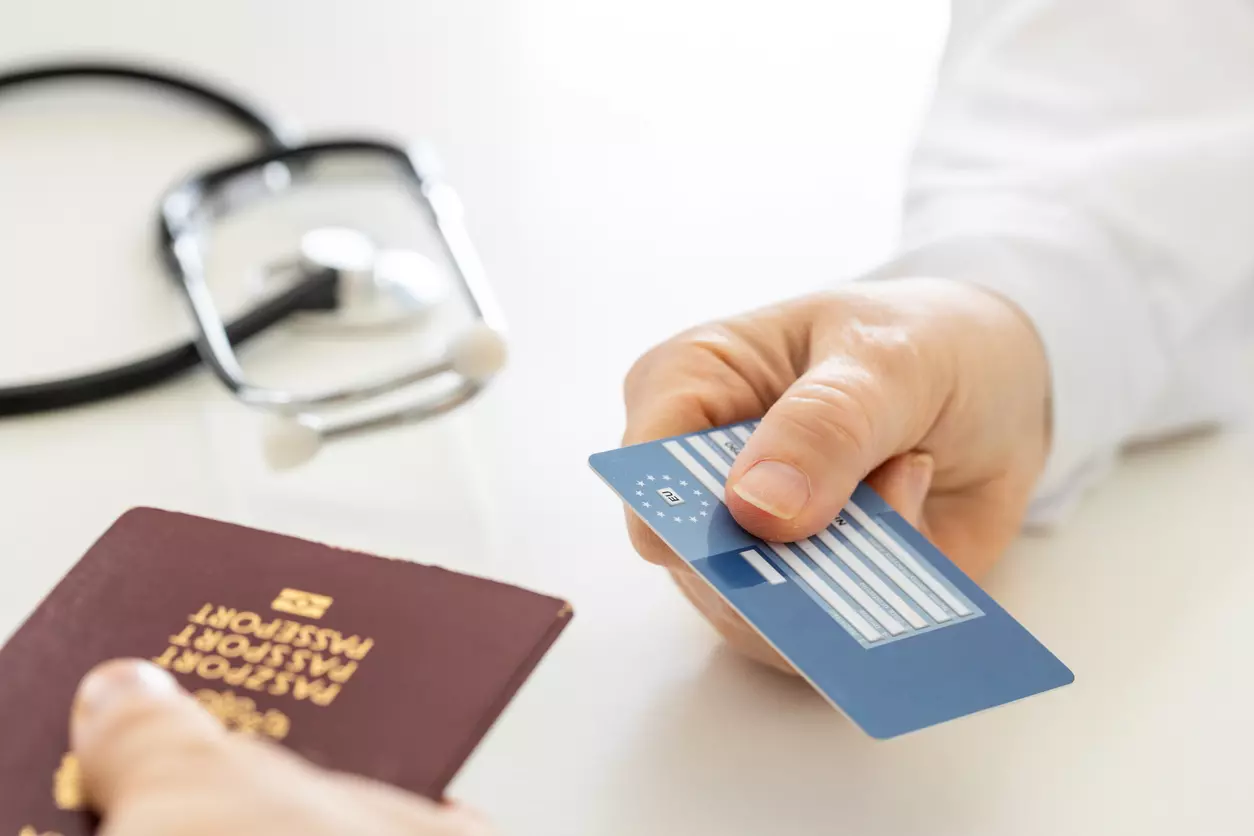
Some travellers can use a European Health Insurance Card, known as an EHIC. This card may help lower the cost of medical care in some European countries. It allows eligible people to receive necessary public healthcare during a short stay, usually under the same rules as those who live in that country.
However, healthcare varies across European countries. Costs, waiting times, and how you book care can all vary.
This guide explains how to see a doctor while travelling in Europe. It covers when to call emergency services, how to quickly find medical help, which documents you may need, how the EHIC works, and when an online consultation may be a simple option.
By the end, you will know what to do if you get ill while travelling, so you can get the right help and feel more confident during your trip.
What to Do First If You Feel Unwell Abroad
Feeling unwell while travelling in Europe can be stressful. It can feel even harder if you are unfamiliar with the local healthcare system or do not speak the language.
The first thing to do is check how serious your symptoms are.
A mild sore throat, upset stomach, allergy, or small skin rash may not need urgent care. But serious symptoms need medical help straight away.
Use this table as a quick guide.
|
Your Situation |
Best Action |
|
Life-threatening symptoms |
Call 112 straight away |
|
Serious injury or severe illness |
Go to the nearest emergency department |
|
Mild illness, such as a cold, allergy, or upset stomach |
Speak to a local pharmacist |
|
Non-urgent health problem that needs a doctor’s advice |
Book a doctor appointment or online consultation |
|
Ongoing health condition that needs treatment during your trip |
Contact a healthcare provider and show your EHIC if you can use one |
Step 1: Check If It Is an Emergency
In EU countries, you can call 112 for emergency help. It is free to call from a mobile or landline.
Call 112 straight away if you have:
- Chest pain
- Trouble breathing
- Signs of a stroke, such as a drooping face or slurred speech
- A severe allergic reaction
- A serious injury or broken bone
- Heavy bleeding
- Loss of consciousness
- Severe dehydration or confusion
Do not wait if your symptoms are serious.
Step 2: Visit a Pharmacy for Minor Health Problems
In many European countries, a pharmacy is a good first place to go for minor health problems.
A pharmacist can give advice, suggest over-the-counter medicine, and tell you if you need to see a doctor.
A pharmacist may be able to help with:
- Colds and flu symptoms
- Mild allergies
- Travel sickness
- Minor stomach problems
- Headaches
- Minor skin problems
- Insect bites
Step 3: Use Public or Private Medical Services
If you need a doctor, you may be able to use public healthcare or a private clinic.
If you can use a European Health Insurance Card (EHIC), you may receive necessary treatment through the public healthcare system. You should usually be treated under the same rules as people who live in that country.
But healthcare is different across Europe. In some countries, you may need to pay upfront and claim a refund later.
Private clinics may be easier to find in tourist areas. They may also have shorter waiting times. But they usually cost more, and the EHIC does not usually cover private care.
Step 4: Contact Your Travel Insurance Provider
It is a good idea to contact your travel insurance provider if you need medical treatment.
An EHIC does not cover everything. It does not usually cover private healthcare, medical repatriation, mountain rescue, or travel problems caused by illness.
Travel insurance may help with these extra costs.
Step 5: Think About an Online Consultation
For non-emergency health problems, an online consultation can be a simple option while travelling.
It may help if:
- You are staying in a remote area
- You cannot find a local doctor quickly
- You need advice about a minor illness
- You need help with an existing health condition
- You are not sure if you need to see a doctor in person
An online doctor consultation should not be used for emergencies. But it can help with many common travel health problems.
When to Call Emergency Services in Europe
Every traveller should know how to get emergency help in Europe. In a serious medical situation, acting fast can save lives.
Across the European Union, you can call 112 for emergency help. This number connects you to ambulance, police, or fire services. You can call it free from a mobile phone or landline.
Many emergency call centres can also help in different languages.
When Should You Call 112?
Only call emergency services for serious or life-threatening situations.
Call 112 straight away if you or someone else has:
- Chest pain or signs of a heart attack
- Trouble breathing
- Signs of a stroke, such as a drooping face, weak arm, or slurred speech
- Loss of consciousness
- A severe allergic reaction
- Heavy bleeding that will not stop
- A serious accident or injury
- Severe burns
- Suspected poisoning
- Seizures
- A major head injury
- Severe dehydration, confusion, or collapse
Emergency vs Non-Emergency Situations
Use this table to help decide when to call 112.
|
Symptom or Situation |
Call 112? |
|
Heart attack symptoms |
Yes |
|
Stroke symptoms |
Yes |
|
Severe breathing problems |
Yes |
|
Major road accident |
Yes |
|
Loss of consciousness |
Yes |
|
Severe allergic reaction |
Yes |
|
Mild cold or flu |
No |
|
Minor stomach upset |
No |
|
Mild headache |
No |
|
Prescription refill request |
No |
|
Minor skin irritation |
No |
If you are not sure whether it is an emergency, it is safer to get urgent medical advice than to wait.
What Information Should You Give?
When calling emergency services, try to stay calm.
Be ready to tell the operator:
|
Information Needed |
Example |
|
Your location |
Hotel name, address, or nearby landmark |
|
What has happened |
Chest pain, trouble breathing, or injury |
|
Number of people affected |
One person, two people, etc. |
|
Patient’s age and condition |
Adult, unconscious but breathing |
|
Your phone number |
Your mobile number for a callback |
If you are in a rural area, share your phone location or map coordinates if you can. This can help emergency responders find you faster.
Will Emergency Treatment Be Free?
Emergency medical care is available across Europe, but the cost can be different in each country.
If you can use a European Health Insurance Card, known as an EHIC, it may help cover necessary public healthcare during a short stay in another EU country. But it does not always make treatment free, and it does not cover private healthcare.
This is why it is best to travel with both an EHIC, if you can use one, and travel insurance.
Important Travel Tip
Save 112 in your phone before you travel. Some countries also have their own emergency numbers, but 112 works across all EU countries.
In a real emergency, do not wait because you are worried about cost, language problems, or insurance. Your health and safety come first.
Can Tourists See a Doctor in Europe?
Yes, tourists can usually see a doctor while travelling in Europe. This applies whether you are on a short city break, a business trip, or a longer holiday.
Most European countries allow visitors to access medical care when needed. But the way you see a doctor can differ from country to country.
It can depend on:
- The country you are visiting
- The type of doctor or clinic you use
- Whether you can use a European Health Insurance Card, known as an EHIC
- Whether you have travel insurance
In most European countries, tourists can use these healthcare options:
|
Healthcare Option |
Best For |
Can Tourists Use It? |
|
Public healthcare clinics |
Necessary medical treatment |
Yes |
|
Private doctors and clinics |
Routine or urgent medical care |
Yes |
|
Hospitals |
Emergencies or specialist care |
Yes |
|
Pharmacies |
Minor illnesses and medicine advice |
Yes |
|
Online consultations |
Non-emergency health problems |
Yes |
You do not usually need to live in the country to get medical care. If you become ill during your trip, you can often book a doctor appointment, visit a clinic, go to a hospital, or ask a pharmacist for advice.
How Healthcare Access Differs Across Europe
Europe does not have one single healthcare system. Each country runs healthcare in its own way.
This means travellers may see differences in:
- How to book an appointment
- How long do they need to wait
- How much does the treatment cost
- Whether they need a referral
- How prescriptions work
- How refunds or insurance claims work
For example, in some countries, you may need to see a GP before seeing a specialist. In others, you may be able to contact some specialists directly.
In some places, you may also need to pay upfront and claim a refund later.
Can You Use Public Healthcare as a Tourist?
Many tourists can use public healthcare if they need medical treatment during their stay.
If you have a valid EHIC, you may be able to access necessary public healthcare under the same rules as people living in that country.
This does not always mean treatment is free. If local people pay part of the cost, you may need to pay the same amount.
The EHIC may help with:
|
Type of Care |
Usually Covered by EHIC?* |
|
Doctor visits in the public system |
Often yes |
|
Emergency treatment |
Often yes |
|
Hospital treatment in the public system |
Often yes |
|
Care for long-term conditions during travel |
Often yes |
|
Private healthcare |
No |
|
Medical repatriation |
No |
|
Planned treatment abroad |
No |
*Coverage depends on local healthcare rules and your eligibility.
What If You Are Not Eligible for an EHIC?
If you cannot use an EHIC, you can still see a doctor as a tourist. But you may need to pay the full cost yourself.
This is why travel medical insurance is important. Depending on your policy, your insurer may help pay for treatment, arrange payment with a clinic, or help you find approved healthcare providers.
If you need medical care abroad, keep copies of:
- Medical reports
- Prescriptions
- Hospital discharge notes
- Invoices
- Payment receipts
You may need these documents when making an insurance claim.
Can Tourists Visit Private Doctors?
Yes. Private doctors and clinics are common across Europe, especially in large cities and tourist areas.
Many travellers choose private care because it may offer:
- Faster appointments
- English-speaking healthcare professionals
- Easy-to-reach locations
- Simple booking
- Longer opening hours
Private healthcare usually costs more than public healthcare. It is also not usually covered by the EHIC.
What Documents Might You Need?
When seeing a doctor abroad, it helps to bring:
|
Document |
Why It Helps |
|
Passport or ID |
Confirms who you are |
|
EHIC, if you can use one |
Helps with public healthcare costs |
|
Travel insurance details |
Helps with insurance checks and claims |
|
Medication list |
Shows what medicines you take |
|
Allergy information |
Helps doctors prescribe safely |
|
Medical records, if needed |
Gives the doctor a useful health history |
Having these documents ready can make your appointment easier and quicker.
Public Healthcare vs Private Clinics in Europe
If you need medical care while travelling in Europe, you may need to choose between public healthcare and a private clinic.
Both options are common in Europe. But they can be different in cost, waiting times, booking, and insurance cover.
Knowing the difference can help you choose the best option for your symptoms, budget, and trip.
Quick Comparison: Public vs Private Healthcare
|
Factor |
Public Healthcare |
Private Clinics |
|
Cost |
Usually lower |
Usually higher |
|
EHIC use |
Often accepted for eligible care |
Usually not accepted |
|
Waiting times |
May be longer |
Often shorter |
|
Appointments |
Depends on local demand |
Usually easier to book |
|
English-speaking doctors |
Depends on the location |
More common in tourist areas |
|
Seeing a specialist |
May need a referral |
Often easier to book directly |
|
Travel insurance |
May not be needed if EHIC applies |
Often needs travel insurance |
|
Emergencies |
Best option is a hospital or emergency services |
Some offer urgent care, but hospitals are better for emergencies |
Public Healthcare in Europe
Most European countries have public healthcare systems. These services help local people and eligible visitors get medical care.
If you can use a European Health Insurance Card (EHIC), you may be able to access necessary public healthcare during a short stay in another EU country.
This means you are usually treated under the same rules as people who live there.
Public healthcare may include:
- GP appointments
- Emergency treatment
- Hospital care
- Care for long-term conditions that cannot wait
- Specialist referrals when needed
One main benefit of public healthcare is that it may cost less. In some cases, the EHIC can help reduce the amount you pay.
Benefits of Public Healthcare
|
Benefit |
Why It Helps |
|
Lower costs |
May reduce medical bills |
|
Access to hospitals |
Useful for serious illness or injury |
|
EHIC support |
May lower costs for eligible travellers |
|
Good medical standards |
European public healthcare systems usually follow strong standards |
Possible Downsides of Public Healthcare
Public healthcare can be helpful, but it may not always be the fastest option.
|
Possible Problem |
What It Means for Travellers |
|
Longer waiting times |
You may wait longer for non-urgent care |
|
Language barriers |
English may not always be spoken |
|
Paperwork |
Rules and forms can be different in each country |
|
Referrals |
You may need to see a GP before a specialist |
These issues can be different depending on the country, city, or clinic.
Private Clinics in Europe
Private clinics are also common across Europe. You can often find them in big cities, tourist areas, business areas, and resorts.
Many travellers choose private clinics because they can be easier and quicker to use.
Private clinics may offer:
- Same-day appointments
- General doctor appointments
- Specialist care
- Tests and checks
- Travel health services
- Minor urgent care
Benefits of Private Clinics
|
Benefit |
Why Travellers Choose It |
|
Faster appointments |
You may be seen sooner |
|
Flexible booking |
Helpful if you have limited time |
|
English-speaking staff |
More common in tourist areas |
|
Direct specialist access |
You may not need a referral |
|
Simpler process |
Booking and paperwork may be easier |
For short trips, quick access can be very useful.
Possible Downsides of Private Clinics
Private clinics can be convenient, but they usually cost more.
|
Possible Problem |
What Travellers Should Know |
|
Higher fees |
Prices can vary a lot |
|
EHIC is usually not accepted |
You may need to pay yourself |
|
Upfront payment |
You may need to pay at the appointment |
|
Insurance claims |
You may need to claim money back later |
Before booking, check whether your travel insurance covers private healthcare.
Which Option Should You Choose?
The best option depends on your health problem and your situation.
|
Situation |
Best Option |
|
Medical emergency |
Public hospital or emergency services |
|
Minor illness that needs quick advice |
Pharmacy or private clinic |
|
Necessary treatment, and you can use an EHIC |
Public healthcare provider |
|
Need an English-speaking doctor quickly |
Private clinic |
|
Need a specialist during a short trip |
Private clinic |
|
Treatment covered by public healthcare |
Public healthcare provider |
Many travellers use more than one service. For example, you may speak to a pharmacist first, then visit a private clinic if you need a doctor. If the problem is serious, you may need to go to a public hospital.
Using an EHIC While Travelling in Europe
If you can use a European Health Insurance Card (EHIC), it can make getting healthcare in Europe easier and cheaper.
But the EHIC does not cover everything. Some travellers think it means all healthcare is free, but this is not true.
Knowing how the EHIC works can help you avoid surprise medical costs while travelling.
What Is the European Health Insurance Card?
The EHIC helps eligible people get necessary public healthcare during a short stay in another participating European country.
This care should be provided under the same rules and at the same cost as for people living in that country.
This means:
- If local people get the treatment for free, you may also get it for free
- If local people pay part of the cost, you may need to pay the same amount
EHIC at a Glance
|
EHIC Feature |
What It Means |
|
Covers necessary healthcare |
Care that cannot wait until you return home |
|
Public healthcare only |
It usually applies to state healthcare services |
|
Same rules as local people |
You pay the same fees as local residents |
|
For short stays |
Holidays, business trips, study trips, and short visits |
|
Not travel insurance |
You still need travel insurance for extra protection |
What Does the EHIC Cover?
The EHIC can help if you need medical care during your trip.
It may cover:
- Doctor appointments in the public healthcare system
- Emergency medical treatment
- Hospital care
- Treatment for sudden illness or injury
- Care for long-term health problems
- Pregnancy care that becomes necessary during travel
- Planned care, such as kidney dialysis or oxygen therapy, if arranged before travel
The main rule is simple. The treatment must be medically necessary during your stay. It should not be something that can be safely waited on until you go home.
Examples of Care That May Be Covered
|
Medical Situation |
Usually Covered by EHIC?* |
|
Sudden infection during a holiday |
Yes |
|
Emergency care after an accident |
Yes |
|
Asthma treatment during travel |
Yes |
|
Kidney dialysis arranged before travel |
Yes |
|
Pregnancy-related care that becomes necessary |
Yes |
|
Public hospital treatment |
Usually yes |
*Cover depends on local healthcare rules and your eligibility.
What Does the EHIC Not Cover?
The EHIC does not cover all medical or travel costs. It is not a replacement for travel insurance.
The EHIC does not usually cover:
|
Service |
Covered by EHIC? |
|
Private healthcare |
No |
|
Medical transport back to your home country |
No |
|
Mountain rescue |
No |
|
Search and rescue services |
No |
|
Lost or stolen belongings |
No |
|
Trip cancellation costs |
No |
|
Planned treatment abroad |
No |
This is why travel insurance is still important, even if you have an EHIC.
Can You Use an EHIC in Every European Country?
You can use an EHIC in participating European countries. But healthcare systems are different from country to country.
Travellers should know that:
- Healthcare rules can vary
- Some countries may ask you to pay first and claim money back later
- Some doctors and clinics may be private and may not accept the EHIC
- You may still need to pay patient fees or part of the cost
Before getting treatment, check whether the doctor, clinic, or hospital is part of the public healthcare system.
What If You Forget Your EHIC?
If you forget your EHIC or lose it while travelling, you may still be able to get healthcare.
Your health insurance provider may be able to give you a Provisional Replacement Certificate, also called a PRC. This is a temporary certificate that gives you the same cover as an EHIC for a short time.
If you cannot get a PRC quickly, you may need to pay for treatment first and claim money back later.
EHIC vs Travel Insurance
The EHIC and travel insurance are not the same. They cover different things.
|
Feature |
EHIC |
Travel Insurance |
|
Public healthcare access |
Yes |
Sometimes |
|
Private healthcare cover |
No |
Often |
|
Medical transport home |
No |
Usually |
|
Emergency evacuation |
No |
Often |
|
Trip cancellation cover |
No |
Usually |
|
Lost luggage cover |
No |
Usually |
|
Travel disruption cover |
No |
Usually |
It is best not to rely only on an EHIC when travelling.
What If You Do Not Have an EHIC?
Not every traveller can use a European Health Insurance Card, known as an EHIC. You may be travelling from outside the European Union, have forgotten your card, or be visiting a country where your healthcare cover does not apply.
The good news is that you can still get medical care in Europe. Tourists can usually use hospitals, clinics, doctors, pharmacies, and online consultations.
However, without an EHIC, you may need to pay the full cost yourself unless you have travel insurance or other health cover.
Can You Still See a Doctor Without an EHIC?
Yes. Doctors and hospitals in Europe treat people based on medical need, not only on whether they have an EHIC.
If you need medical help, you can usually:
- Visit a public healthcare centre
- Book a private doctor appointment
- Go to an urgent care clinic
- Visit a hospital emergency department
- Arrange an online consultation
- Ask a pharmacist for advice
The main difference is cost. Without an EHIC, you may need to pay more.
What Costs Might You Have to Pay?
Without an EHIC, medical costs can be different depending on:
- The country you are visiting
- Whether you use public or private healthcare
- The type of treatment you need
- Whether you need hospital care
- Whether you need tests or prescriptions
Common Medical Costs Without an EHIC
|
Healthcare Service |
Will You Usually Need to Pay Without an EHIC? |
|
GP or doctor appointment |
Yes |
|
Private clinic appointment |
Yes |
|
Hospital treatment |
Often yes |
|
Medical tests |
Usually yes |
|
Prescription medicine |
Usually yes |
|
Emergency treatment |
You may still get a bill later |
Even if emergency care is given straight away, you may be charged afterwards.
Why Travel Insurance Matters
If you do not have an EHIC, travel insurance is very important.
A good travel insurance policy may help pay for:
|
Cost |
Often Covered by Travel Insurance? |
|
Doctor appointments |
Yes |
|
Hospital treatment |
Yes |
|
Emergency medical care |
Yes |
|
Ambulance transport |
Often |
|
Medical evacuation |
Often |
|
Transport back to your home country |
Often |
|
Extra accommodation after illness |
Sometimes |
*Cover depends on your insurance policy.
Before you travel, check your insurance documents so you understand:
- How much coverage do you have
- Any excess you may need to pay
- Health conditions that are not covered
- What to do in an emergency
- Which clinics or hospitals does your insurer prefer
Many travel insurers also have emergency help lines that can guide you to suitable medical care abroad.
What Documents Should You Keep?
If you get medical treatment without an EHIC, keep all your paperwork.
Important documents include:
- Medical reports
- Doctor’s notes
- Prescriptions
- Hospital discharge notes
- Detailed invoices
- Payment receipts
You may need these if you make a travel insurance claim.
What If You Forgot Your EHIC?
If you can use an EHIC but forgot it, contact your health insurance provider as soon as possible.
They may be able to give you a Provisional Replacement Certificate, also called a PRC. This is a temporary document that gives you the same rights as an EHIC for a short time.
A PRC may help if your EHIC was lost, stolen, forgotten, or has not arrived before your trip.
If you cannot get a PRC quickly, you may need to pay first and claim money back later.
Should You Choose Public or Private Healthcare?
Without an EHIC, many travellers use private healthcare because it can be quicker and easier to book.
Private healthcare may offer:
- Faster appointments
- Easier booking
- English-speaking staff
- Clinics in tourist areas
But private healthcare usually costs more than public healthcare.
Comparing Your Options Without an EHIC
|
Situation |
Best Option |
|
Minor illness |
Pharmacy or online consultation |
|
Need a doctor quickly |
Private clinic |
|
Serious medical problem |
Hospital or emergency services |
|
Your insurer recommends a provider |
Follow your insurer’s advice |
|
You need to claim money back later |
Keep all receipts and records |
Seeing a Doctor Online While Travelling in Europe
Getting medical advice while travelling is not always easy. You may be staying far from a town, dealing with a language barrier, or struggling to get a local doctor appointment.
In these situations, an online consultation can be a simple way to get medical advice without going to a clinic.
Online consultations are best for non-emergency health problems. A doctor can ask about your symptoms, check your medical history, suggest treatment, and tell you if you need to see someone in person.
Travellers often use online consultations for:
|
Health Concern |
Suitable for an Online Consultation? |
|
Cold and flu symptoms |
Yes |
|
Allergies |
Yes |
|
Minor skin problems |
Yes |
|
Stomach upset or digestive problems |
Yes |
|
Medication advice |
Yes |
|
Travel-related health concerns |
Yes |
|
Chest pain or trouble breathing |
No, seek emergency care |
One of the main benefits is convenience. Instead of trying to find a clinic in a new place, you can speak with a doctor from your hotel, accommodation, or another private place with internet access.
If you want to see an online doctor while travelling in Europe, Mobi Doctor can help you speak with a qualified doctor through an online consultation. This may be useful for minor illnesses, medicine questions, or non-emergency symptoms during your trip.
Online consultations are not for emergencies. If you have chest pain, trouble breathing, signs of a stroke, or a serious injury, call 112 or seek emergency medical help straight away.
For many travellers, online consultations are a practical way to get medical advice while abroad, especially for minor illnesses or health problems that do not need urgent in-person care.
Conclusion
Getting ill while travelling can be worrying, especially when you are far from home and do not know the local healthcare system.
The good news is that Europe has many healthcare options for visitors. You may be able to visit a pharmacy, use public healthcare, go to a private clinic, attend a hospital, or book an online consultation.
The most important thing is knowing where to get help.
For a life-threatening emergency, call 112 straight away. For minor illnesses, such as colds, allergies, or stomach problems, a local pharmacy may be able to help. If your symptoms need a doctor’s advice, you can usually choose between public healthcare and private clinics.
If you have a valid European Health Insurance Card (EHIC), it may help you access necessary public healthcare under the same rules as local residents. But an EHIC is not the same as travel insurance. Travel insurance can help cover extra costs, such as private treatment, medical transport, and travel problems caused by illness.
For non-emergency health concerns, an online consultation can be a simple option. Mobi Doctor can help you speak with a qualified doctor from wherever you are in Europe, so you can get medical advice without needing to find a local clinic.
By understanding your healthcare options before you travel, you can feel more prepared and focus on enjoying your trip.
Healthcare in Popular European Destinations
Healthcare systems can vary significantly across Europe. Public healthcare access, private clinics, waiting times, prescription rules, and costs may differ depending on the country you are visiting.
If you are travelling to one of Europe’s most popular destinations, these guides may help: